Image
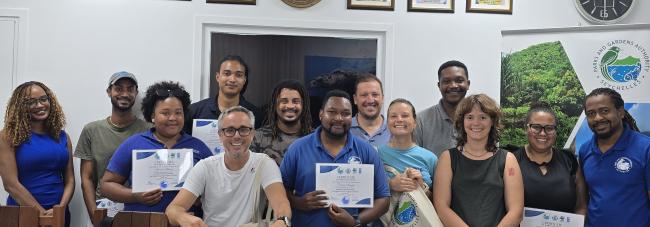
The Seychelles Parks and Gardens Authority (SPGA) has concluded a week-long Scientific and Socio-Economic Monitoring Capacity-Building Training for Mangrove, Reef and Seagrass Corridors, delivered under the GOD- GEF-UNDP Ridge to Reef (R2R) Project. Held from 31 August to 4 September 2026, the training aimed to strengthen local technical capacity in the monitoring, assessment and management of Seychelles' most important coastal and marine ecosystems, namely mangroves, coral reefs and seagrass habitats.
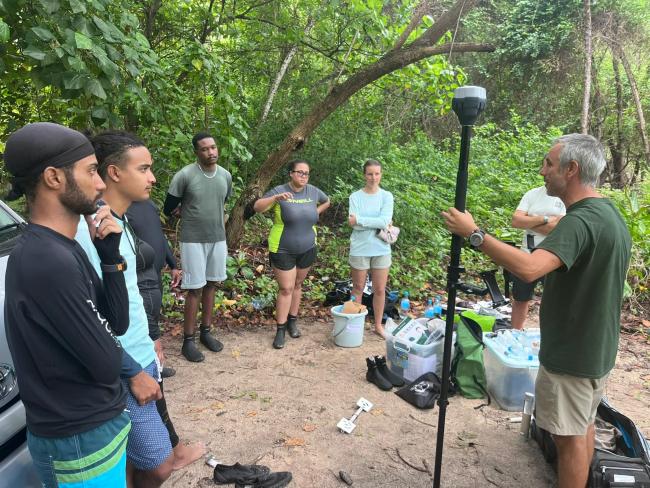
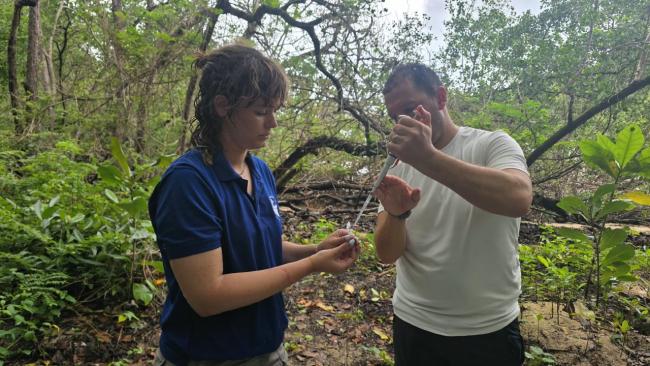
To provide participants with a holistic and comprehensive experience, the training combined classroom sessions at SPGA Headquarters with practical field activities in the Port Launay Marine Park and laboratory sessions at the Seychelles Fisheries Authority (SFA). Through this approach, participants gained hands-on experience in field surveys, sample collection, environmental observations and laboratory processing.
The training was delivered by a team of local and international experts. Dr. Alessio Rovere, Professor at the Ca' Foscari University of Venice led sessions drawing on his research into sea-level change, coastal geomorphology and the effects of climate change on coastal environments. Dr. Ulisse Cardini, Senior Researcher at the Stazione Zoologica Anton Dohrn, Italy's National Institute of Marine Biology, Ecology and Biotechnology, shared his expertise in marine microbial symbioses, host-microbe interactions, biogeochemical cycling, and the functioning and resilience of seagrass and coral reef ecosystems.
Local expertise was provided by Dr. Anna Koester of the Seychelles Islands Foundation (SIF), a marine researcher and coral reef ecologist whose work focuses on coral reef resilience, the impacts of and recovery from coral bleaching, and long-term marine monitoring at Aldabra Atoll, where she also leads marine monitoring activities and supports the development of marine research projects. Additional technical and practical expertise was delivered by Mr. Rodney Melanie of the Seychelles Fisheries Authority, who facilitated a session on fish muscle tissue sampling and otolith extraction.
Key components of the training included the monitoring of mangrove, coral reef and seagrass ecosystems, practical field surveys and environmental sample collection, the fish muscle tissue sampling and otolith extraction session facilitated by SFA, the use of standard monitoring methods and equipment and knowledge exchange between trainers and participating organisations.
The training is expected to improve participants' practical monitoring skills, strengthen collaboration between local institutions, and support more consistent and reliable data collection for the conservation and management of Seychelles' coastal and marine ecosystems. Closing the training, SPGA Chief Executive Officer Mr. Rodney Bonne thanked all participants and facilitators for their commitment throughout the week-long programme. He urged them to use and apply the knowledge gained in their work to make evidence-based decisions. "Although participants are from different organisations, including SPGA, we are all working towards a common goal of protecting our natural environment," he said, encouraging the group to use the training as a first step towards greater collaboration and networking across institutions.